Tag: Hospitality

  • Bar Organizational Structure and Their respective Duties

    Bar Organizational Structure and Their respective Duties

    Bar organizational structure and charts – For some people, being able to work in a bar is a fun job.

    Being able to serve drinks to relieve guests’ fatigue is an interesting thing to do.

    Moreover, guests are satisfied with the drinks served, it is not impossible that we can get some tipping sheets. Yes, right?

    Of course, the team in a bar consists of several people who have their respective duties and functions according to their positions.

    The number of teams usually depends on the scale of the hotel/restaurant where the bar is located.

    Bar Organizational structure Chart in the Small to Mid-Scale bar
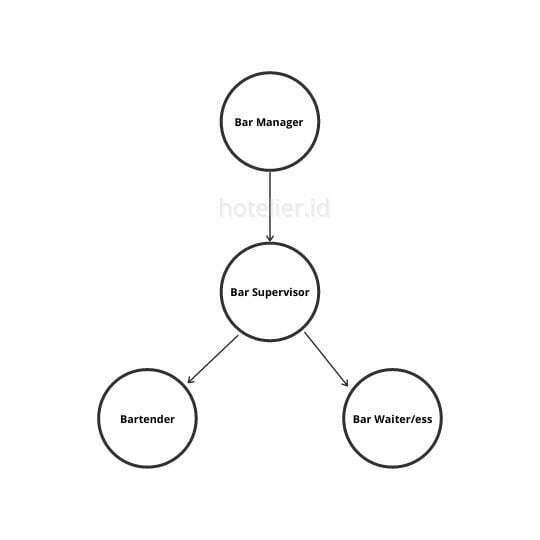
    Bar Organizational Structure and Their respective Duties
    Bar Organizational Structure chart

    Task Bar Manager

    According to its function, a leader or manager is of course the main task of carrying out management functions such as planning, organizing, executing, and controlling related to bars such as:

    • Create a bar sales strategy to achieve the target given by the company
    • Make sales report every month
    • Ensure that bar operations are running according to the SOP
    • Check the log book, if there is any important information or message
    • Validate the requisition list for stock beverages, perishables, groceries, etc.
    • Deliver beverage sales, attendance, and requisition lists to the F & B Manager for the validation process including transferred and broken reports and so on.
    • Check the stock of peanuts, criping, and beverage stock. If supplies run low, you must immediately submit a warehouse request (This is usually assisted by the Bartender because he is the one who directly uses it to serve guests.)
    • Checking the cleanliness and tidiness of the room, as well as the cleanliness and tidiness of the subordinates (personal appearance).
    • Checking other preparations used in the operation, such as cleanliness and completeness and sufficient quantity of each item.
    • Check the cleanliness and completeness of the bars in several outlets.
    • Hold briefings with all staff.
    • Every week accompanying Cost Control to conduct an inventory.
    • Appraisal staff every 6 months
    • Report problems that occur to FBM

    Also read: What is Sparkling Wine and How to Make It at Home

    When the bar is operating:

    • Supervise the running of services and operations in accordance with the company’s overall SOP
    • Help welcome guests who come.
    • The Bar Manager must be able to provide motivation and work encouragement to subordinates and maintain good relations with other departments.

    Bar Captain/Supervisor Duties

    Of course, the supervisor is the second hand of a manager. So when the manager is not in the area, the bar supervisor is responsible for the smooth running of all activities in the bar team. In general, the task of the supervisor bar

    • Make a monthly work schedule for all team bars
    • Assign tasks to Bartenders to outlets.
    • Provide briefing, briefing and training, both to all teams at the bar
    • Order the bartender or bar waiter/ess to do side duties.
    • Check stock of beverages, garnishes, peanuts and so on.
    • Checking the drink list, the neatness of the tables and chairs and the preparations that have been done by the bartender and bar waiter/ess
    • Accommodate and resolve issues facing bartenders and water/ess bars.

    When the Bar is operating:

    • Welcoming guests in a friendly and courteous manner, delivering and finding suitable seats.
    • Offer/suggest and take drink orders from guests
    • Always maintain smooth service.
    • Busy helping the bartender make cocktails and
    • helping the Bar Waiter serve drinks to guests; etc

    When the bar closes

    • Conduct an evaluation of previous performance
    • Record sales results and make reports.
    • Provide briefing if needed
    • When going home, check whether the condition of the room is clean and tidy, the doors are locked, and so on.

    Bartender’s Duty

    As we know the bartender is someone who is in charge of making, concocting and dispensing drinks.

    In addition, here are the duties of a bartender:

    • Clean the bar area, especially the parts that have not been cleaned by housekeeping.
    • Wipe tables, chairs, counters, and drink bottles.
    • Take various drinks, groceries, and perishables from
    • the warehouse to replace goods that have been sold or to increase stock at the time of peak hour
    • Taking goods/supplies whose inventory is less than
    • stewards, such as muddler, coaster, olive-pick, paper napkin, straw, and glasses.
    • Prepare welcome drinks for guests who check in that day, whether for VIP guests, regular guests, group guests, or guests who come individually.
    • Prepare fresh lime juice for cocktail mix or sliced ​​lemon for garnishes and so on.
    • Prepare and arrange tools for the operation, including shaker, jigger, cocktail strainer, funnel, bar knife, can opener, corkscrew, bottle opener, ice spoon, ice tongs, wine basket, and so on
    • Prepare condiments such as tabasco and lea & Perrins sauce syrup, angostura bitter, fresh eggs, and so on, including cherry, olive, salt & pepper (salt and pepper)
    • Provide potato chips, cassava chips, peanuts, and so on
    • Prepare beer, soft drinks, and white wine in a cold place in sufficient quantities

    When the bar is operating

    • Make cocktail orders for guests according to standard recipes and sizes that have been set.
    • Always keep the workplace neat and clean.
    • Always neat in appearance, polite, friendly and maintain good relations with guests and so on.

    When the bar closes

    • Storing tools in their original place after cleaning, and drying thoroughly
    • Collect empty bottles and store them at the appointed time
    • Rearrange drink bottles in storage
    • Tidy and clean the counters of food houses to avoid the danger of rats or other insects,
    • Reporting to the Bar Supervisor if there are problems with operating time.

    Bar waiter/ess duties

    • Together cleaning and maintaining the cleanliness of the bar room, counters, tables, chairs, and so on.
    • Helping the Bartender take various drinks from the warehouse, perishables (lemon, eggs), groceries items such as juices, peanuts, potato & cassava chips, condiments, syrup, sugar, and so on.
    • Bar table set up with cocktail paper napkins that have been folded and neatly arranged in paper napkin stands, ashtrays, drink lists, tend cards, and flower vases
    • Help the Bartender prepare clean glasses, potato chips, peanuts, and so on.
    • Arranging the location of the tables and chairs, and so on.

    When the bar is operating

    • Welcoming guests in a friendly and courteous manner
    • Invite guests to sit
    • Taking drink orders from guests
    • Serve drinks that have been made and prepared by the Bartender to guests in a friendly, flexible, and polite manner.
    • Appear neat, and clean, and always maintain a good relationship with guests.

    When the bar closes

    • Together with other teams clean and tidy up the table layout and other equipment
    • Collecting dirty glasses and bottles
    • Inform the FB Supervisor if there are obstacles regarding performance on that day.

    That is the general organizational structure of the bar and their respective duties.

    Reference: Bars, Drinks, and Their Services – H. Marsum Widjojo Atmodjo, SE

  • 40 Hotel Room Status and Description [Complete]

    40 Hotel Room Status and Description [Complete]

    Hotel Room Status -Many people say that working in a hotel is good, isn’t it? Wear a suit, tie, handle important people and the service charge is high.

    Indeed, such a mindset is still inherent in the minds of the general public. In fact, when directly involved in the world of hospitality, it is not as beautiful as the image. 

    Just like working in other industries, there are many things that we must learn and understand before going into the field.

    Starting from the system, work culture, and especially in hotels, the most important thing for us to know at the beginning is the status of the rooms.

    This is very important because the status of this room will be related to what actions will be taken against the room.

    40 Complete Hotel Room Status

    Hotel room status is a sign that is used to make it easier for the operational team to identify what actions should be applied to that room.

    Also read: Upselling Tips for Front Office Hotel Teams

    The status of this room will appear in the property management system (PMS) and can be seen by all teams in the hotel.

    The following are some of the common room statuses we encounter when we are on duty in hotels. For those of you who are just learning about hospitality, you can note this:

    1. Vacant Clean

    The room is empty and clean

    2. Vacant Dirty

    The room is empty but still dirty

    3. Vacant Ready

    The room is clean and ready for sale

    4. Occupied Clean

    The room has been filled with guests and has been cleaned by the room attendant

    5. Occupied Dirty

    The room has been filled with guests but the room attendant team has not cleaned it

    6. DND (Do Not Disturb)

    Guests in the room do not want to be disturbed

    7. OOS (Out of Service)

    Room under repair

    8. OOO (Out of Order)

    Rooms are under repair and usually last a long time. Damage may occur quite seriously for this room and takes a long time. In OO conditions it will usually reduce availability

    9. EA (Expected Arrival)

    List the names of guests who will check in and already contains the room number

    10. ED (Expected Departure)

    List the names of guests who will check out on that day

    11. Check-in (C/I)

    Guests who have arrived at the hotel and complete all administration before entering the room

    12. Check Out (C/O)

    Guests who have paid all payments and have left the hotel

    13. DU (Day Use)

    Guests who check-in in one room but will check out on the same day before the night audit is run

    14. SO (Sleepout)

    Guests who have booked a room but don’t sleep in the room

    15. COMP (Compliment)

    Guests who stay but are not charged a room fee (Free). These are usually guests from the media for marketing needs, guests from the hotel owner or the owner’s family.

    16. WIG (Walk in guest)

    Rooms are occupied by guests who come directly to the hotel and book on the same day. In other words without making a reservation in advance.

    17. VIP (Very Important Person)

    This means that this room is filled by someone who is quite important or a public figure. For example Officials, Artists, and others.

    Special services are also needed to handle guests in rooms with a VIP sign.

    18. HU (House Use)

    The room occupied by hotel staff

    19. Stay Over

    The guest has decided not to check out and will stay at least one night.

    20. Cleaning in Progress

    The room Attendant is in the process of cleaning the room.

    21. Sleep Out

    The next hotel room status is Sleep Out. This means that hotel guests who have booked rooms and completed administration do not sleep in their rooms.

    22. On Queue

    The guest has arrived at the hotel, but the room provided is not ready. In such cases, rooms are placed on Queue status for housekeeping staff to prioritize those rooms first.

    23. Skipper

    The guest has left the hotel without making arrangements to settle his account.

    24. LO Lockout

    The room has been locked so that the guest cannot re-enter until he or she is cleaned by the hotel staff.

    25. DNCO – Didn’t Check Out

    The guest made arrangements to pay the bill (and thus excludes the skipper), but instead he left without notifying the Front Office.

    26. DO Due Out

    Rooms are expected to be vacant after the following guest checks out.

    27. LC – Late Checkout

    The guest has requested and is permitted to check out later than the hotel’s normal/standard check-out time.

    28. EC – Early Checkin

    The guest has requested Early Check-in and is permitted to check-in earlier than the hotel’s normal/standard check-in time.

    29. V/C or O/V – Status Unclear

    (Whether the room is vacant and clean or occupied or vacant) needs to be verified by Housekeeping staff.

    30. VCI – Vacant, Cleaned, and Inspected

    Empty Room, Cleaned and Checked by Housekeeping Supervisor.

    31. H/L – Heavy Luggage

    Guests bring luggage that is heavier than normal.

    32. L/L – Light Luggage

    Guest with very light built-in onions.

    33. N/L – No Luggage

    Guests come with no luggage.

    34. DL – Double Lock

    The guest has put a double lock in the room.

    35. CL – Chain Lock

    Guests install chain locks in hotel rooms.

    36. NCI – Newly Checked In

    The room has been checked within the last 1-2 hours.

    37. NS – No Show

    Guests who make room reservations but do not register or check in.

    38. SR – Service Refused

    The guest refuses to have the room cleaned.

    39. V – Vacant

    Empty

    40. MUR – Make-Up Room

    Doing guest room cleaning work after guests check out, then they have cleaned again so that guests who have just come to stay again can rest in peace, comfort, and safety.

    41. PMR – Please Make up Room

    That is, the guest asks for the room to be cleaned

    Those are some of the statuses of hotel rooms that are generally used in a hotel.

    Of course, by knowing these terms, housekeeping and the front office will find it easier to work together and communicate effectively.

  • Upselling Tips for Front Office Hotel Teams

    Upselling Tips for Front Office Hotel Teams

    Upselling is one of the sales strategies commonly used to increase revenue by offering products that are more expensive than the products that consumers want to buy.

    No exception in hotels, upselling is usually carried out when new guests arrive at the hotel to check in by offering more expensive rooms or other activities that guests have the opportunity to buy.

    Usually, there is an incentive program for reservations and the reception team offered by hotel management helps motivate staff to make this up-selling program run well.

    Definition of Upselling

    Upselling is often said to be one of the arts of selling.

    The upselling technique is a strategy that can be understood as a selling technique to persuade customers so that they want to spend more money.

    Also read: Sequence of Service Restaurant: Definition and Procedure for Implementation

    So that customers buy products of the same type at a higher price. Or products with additional advantages such as additional bonuses or guarantees of better quality/details.

    In up-selling sales techniques, we are not required to know the customer to find out his needs.

    ut in the up selling technique, we are required to master the advantages of one product in order to offer it to customers.

    For example, if a customer has booked a deluxe room, then we can offer to upgrade to a suite, for example.

    Of course, we have to explain the benefits that customers get when upgrading the room.

    In this example, we are driving customers to spend more money on the products they buy.

    Example of SOP Upselling at a Hotel

    The upselling concept is a method implemented with the aim of providing benefits to guests, employees, and management so that they can motivate employees as the spearhead of this up-selling program.

    Besides that, training programs need to be implemented, so that employees really understand and are able to carry out standard operating procedures to do up-sells.

    This situation will help avoid protests from prospected guests, and time is spent more effectively. The following is an example of an upselling SOP that can be used as a reference:

    • Always greet every guest with a smile in your voice and face.
    • Always Establish and maintain eye contact with guests.
    • Ask open-ended questions to understand guest needs and requirements, provide timely advice and offer alternatives by upselling.
    • Understand guest profiles from reservation details and identify guests who are most likely to occupy higher category rooms.
    • Bookings made through the company or negotiated rates or by the sales team will most likely not take higher category rooms and therefore their bill is usually paid by their company.
    • Honeymooners, family vacation trips, long stays, online travel agents (OTA), direct bookings, direct arrivals, etc. Most likely will choose the upsell offer. This is because in most cases guests who come to stay at the hotel do not know the different rooms offered by the hotel.
    • Be fun and like a business, because you are selling yourself as much as you are selling hotel amenities and services.
    • Find out the guest’s name right away and use it at least three times during the conversation.
    • Always use appropriate titles such as Mr, Miss, Mr, and Mrs when greeting guests and never call guests by their first names, always use last names with appropriate titles.
    • Attempt to identify guest needs as these needs may not have been identified during the reservation process.
    • Customize guest needs with room furnishings or amenities or views (ocean view, pool view, mountain view), etc.
    • If a guest stays several nights then he will be attracted to a larger or more spacious room.
    • If guests are on their honeymoon, offer rooms with views such as sea facing, pool facing, mountain facing rooms, etc.
    • If a guest has a reservation in a lower category, state the main differences and additional features they get when compared to a higher category room.
    • Inform about additional fees or rate differences with encouraging statements such as for X amount difference you can get a room with a sea view.
    • Upsell the room by showing the features and benefits first, then mention the price difference.
    • If there are two different types of rooms available, state the advantages of the two rooms so that guests can choose the best one that suits their needs
    • For walk-ins always provide details of a lower category and higher category to avoid the risk of losing revenue when trying to upsell to guests.
    • Always thank guests after a successful upsell.

    The up-selling program is a program that is very possible to run because the majority of guests do not know and recognize hotel products, so they often order rooms or other standard hotel products, which do not match their needs and desires.

    This opportunity needs to be used by management to increase hotel income. It’s easy? Let’s practice!

  • Benefits of the Accor Live Limitless Program for its Members!

    Benefits of the Accor Live Limitless Program for its Members!

    Do you like traveling or traveling to new places for vacation, adventure, or just for business, both at home and abroad? If the answer is yes, then Accor Live Limitless is one of the things you must know.

    When visiting a new place and want to spend more time, for example up to a few days, of course, you need a comfortable place to stay, right? Well, Accor Live Limitless is here for those of you who regularly visit new places or frequently vacation abroad.

    There are many benefits that you can later get by having an Accor Live Limitless, such as staying at a luxury hotel for free. Check out the full information below.

    What is Accor Live Limitless?

    What company is Accor Live Limitless? According to the Wikipedia page, ALL or Accor Live Limitless is a loyalty program with the latest global lifestyle concept belonging to Accor, which is the world’s leading multinational hospitality company with headquarters in France.

    Also read: 10 Best Glamping in Bali with Amazing View and Experience

    Not only hotels but the largest hospitality company in Europe is also managing other types of lodging such as resorts and even entertainment properties. Accor itself currently has around 5,300 branches in around 110 countries, including Singapore.

    Returning to ALL earlier, this program was officially launched at the end of 2019 and introduced to Indonesia on February 16, 2020, which at that time was held in Senayan City, The Atrium, Jakarta.

    Accor Live Limitless Benefits

    Benefits of the Accor Live Limitless Program for its Members!

    When you first join the ALL loyalty program, you will automatically become a Classic member. The longer or often you stay at a hotel that is included in the ALL list, the more points or rewards you will get and the faster your status will rise.

    Well, the higher your status level as an ALL member, the more benefits you can get, such as:

    • Cheaper hotel rates.
    • Check-in and check-out times are more flexible (you can check in early and check out later).
    • Get premium wi-fi facilities.
    • Can enjoy special customer service.
    • Get on the priority hotel guest list.
    • Guaranteed room availability.
    • Welcome amenities
    • Access to Executive Lounge.
    • 10% discount at hotel restaurants and bars.

    Apart from the list above, there are many other benefits. But what you need to know is that you can’t get all of these benefits at once. So, the benefits you can get depend on your member status in ALL.

    The way to get Accor Live Limitless Points is

    The key to being able to enjoy a number of the benefits above is to have points that are divided into the following two categories:

    • Rewards points: These types of points can be exchanged for airline program frequent flyers or staying at hotels that are included in the ALL list.
    • Status points: You can use these points to increase member status. The more expensive the hotel you choose to stay at, or the longer the duration of your stay, the faster you will move up to an elite member of Accor Live Limitless.

    Then the way to get these points is to stay at a hotel on the ALL list and pay with a CIMB Niaga credit card which is the only issuer of Accor co-brand credit cards in the country.

    Membership Level in Accor Live Limitless Is

    In total there are 5 levels of membership in the ALL program consisting of:

    • Classic: automatically when you become a new member of ALL.
    • Silver: earned after you stay at least 10 nights or spend 800 Euros (approximately SGD $1,251) for the stay.
    • Gold: you will become a member at the Gold level if you have stayed at least 30 nights or spent around 2,800 Euros stay. But there is an instant way to get to this level by buying an ibis BUSINESS Card which costs around 90 Euros.
    • Platinum: can be obtained by staying 60 nights or spending 5,600 Euros for the stay.
    • Diamond: obtained after you spend 10,400 Euros to stay.

    Becoming an Accor Live Limitless member is one of the right choices for those of you who frequently travel and stay at hotels. There are many benefits that you can get depending on your membership status and in the manner described above.

  • Spirulina Mask: Ingredients, Benefits, and How to Use 2022

    Spirulina Mask: Ingredients, Benefits, and How to Use 2022

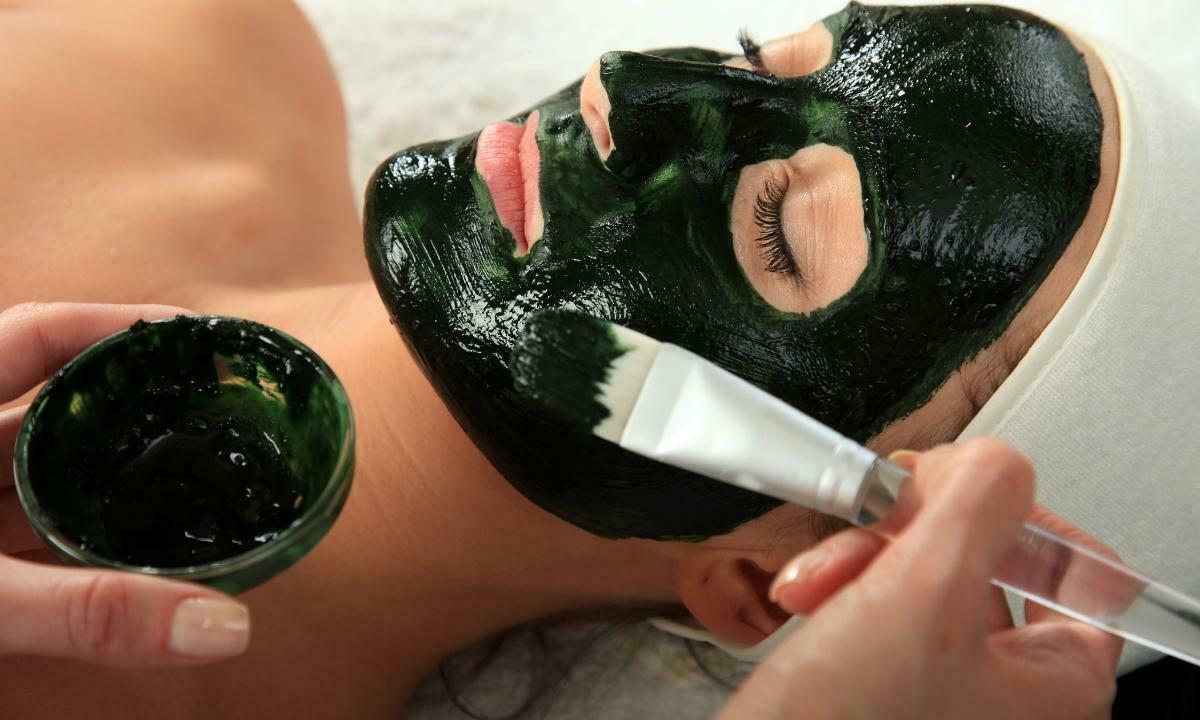
    The currently viral beauty product is the Spirulina mask. So, what is spirulina? This ingredient is much sought after for facial care. This is because there are so many ingredients in Spirulina that are beneficial for beauty.

    Spirulina is a type of algae plant that is effective for treating acne to excess oil. This plant is bluish green and contains nutrients needed by the face.

    In the health sector, Spirulina is also used to treat asthma, diabetes, and cancer. So, these many benefits make Spirulina used as a mask for beauty. Then, what are the contents, benefits, and how to use it? Check out the following explanation.

    What is Spirulina?

    What is Spirulina
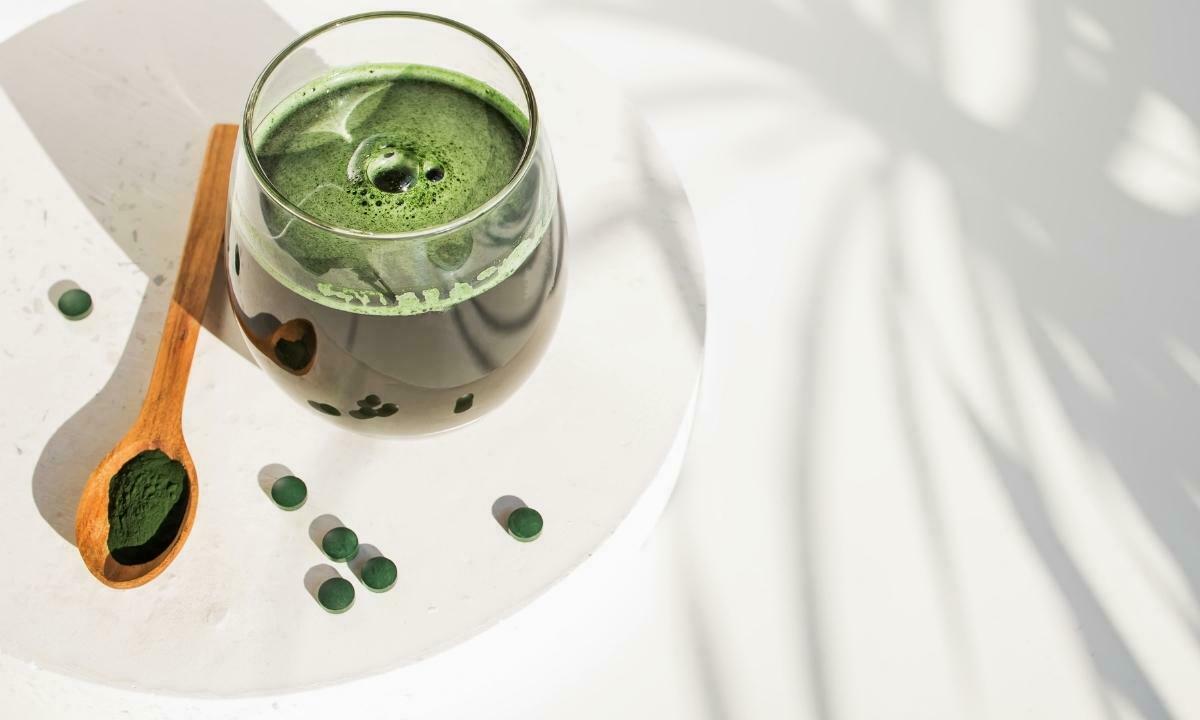
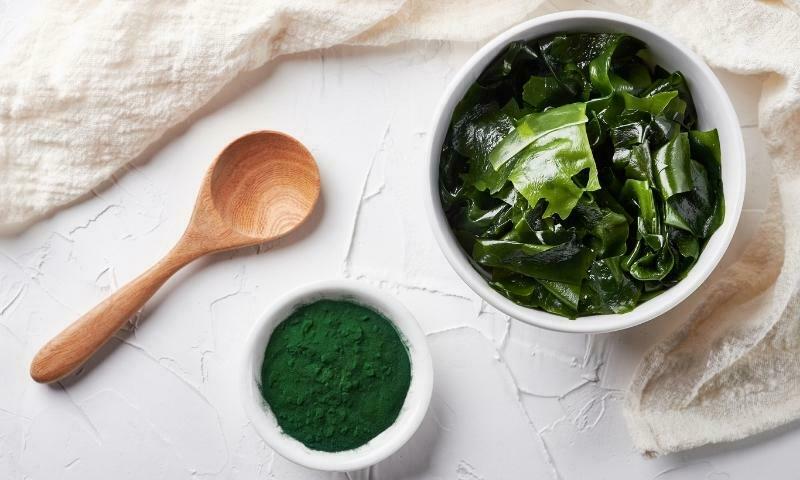
    Spirulina forms before extraction

    Quoting from Healthline explained that Spirulina is an organism that grows in both fresh and salt water.

    Spirulina is a type of cyanobacteria, which is a family of single-celled microbes often referred to as blue-green algae.

    After going through several extraction processes, it is known that spirulina has many very useful ingredients such as:

    • Vitamin B1 (thiamine): 11% of the RDA
    • Vitamin B2 (riboflavin): 15% of the RDA
    • Vitamin B3 (niacin): 4% of RDA
    • Copper: 21% of RDA
    • Iron: 11% of the RDA
    • Antioxidant

    And what’s even more amazing is that many people do not only consume it as a dietary supplement, but some also make it into a drink such as juice.

    Ingredients and Benefits of Spirulina Mask

    Ingredients and Benefits of Spirulina Mask

    Spirulina is rich in nutrients that take better care of the skin. Here are some of the ingredients and their benefits for the health of your facial skin.

    1. As Antiaging

    This mask made from Spirulina contains ingredients that are useful for fighting aging and wrinkles on the face. When entering the age of 30 years, the skin’s ability to regenerate decreases.

    Therefore, it is necessary to carry out treatment from a young age, starting from 22 years. The benefits of this mask will also help you to prevent aging. Spirulina contains vitamin E, antioxidants, and selenium.

    This material makes the face more supple and firm. Regular use will make the skin healthier.

    2. Can Get Rid Of Pimples

    The next benefit of this mask is that it can overcome acne. How it works from Spirulina can remove germs and oil (sebum) on the face.

    It is known that these oils and bacteria are the cause of the appearance of acne. So, Spirulina which is made into a mask is also able to get rid of acne. Whether it’s a small pimple, to a large cystic pimple.

    However, in its use, of course, it is not instant. This mask will only keep the skin clean so the acne will slowly disappear.

    Spirulina is also suitable for people with oily or oily skin types. The mask will absorb excess sebum making it fresher and healthier.

    3. Brighten Skin

    The next benefit of Spirulina is that it can brighten the face. The content of vitamin C in it will make skin cells regenerate faster or there is a good exfoliation. Thus, dead skin cells will be lifted so that the skin becomes brighter.

    Spirulina is also suitable for those of you who want to overcome a dull face-on face.

    4. Face becomes more moisturized

    Skin moisture is an important thing that needs to be maintained to make skin healthy. Moist skin can avoid dry and dull skin. Moist skin also keeps the face from acne. The moisturizing content of Spirulina is one of them.

    5. As Antibacterial

    Spirulina also contains antibacterial and antioxidants, which is what makes this mask efficacious as a detoxifier with natural ingredients. The presence of antibacterial content in the mask material will make the skin free from toxins to bacteria.

    6. Can remove acne scars

    As previously explained, Spirulina contains vitamin E. This vitamin is needed to get rid of acne scars because it can fade black spots on the face. So, the black spots of acne scars can be disguised.

    Acne scars that can be cured by Spirulina are black spots and uneven surface color. Vitamin E in it is able to overcome these problems, especially for faces that have curves.

    So, the face will look more radiant and healthy. Who doesn’t want it?

    7. Shrink Pores on the Face

    The last benefit of Spirulina is that it can shrink the pores on the face. So, the skin looks smoother. The pores on the face are often annoying because sometimes they are prone to acne due to dirt that accumulates in the open pores.

    So, if the pores are small, it will certainly be useful to overcome the causes of acne and make you look more confident because you have smoother skin. The content that is useful for shrinking pores is vitamin E.

    How to Use Spirulina Mask

    How to Use Spirulina Mask

    For more effective results, the use of masks from Spirulina should pay attention to the following tips. This will help increase the maximum effect for the face. Here’s how to use it:

    1. Wash Your Face First

    The first step before wearing a mask is generally to wash your face with soap. This is intended so that the dirt that sticks to the face is lost and reduced. In addition, it makes the skin moister so that it can absorb the Spirulina content optimally.

    After using the facial wash, dry with a soft towel. Only after doing so, can be prepared to use the Spirulina mask.

    2. Prepare Materials and Water

    After washing your face, feel free to prepare and mix the mask powder with water. There are various brands that you can choose from. The dosage instructions for mixing mask powder and water may vary.

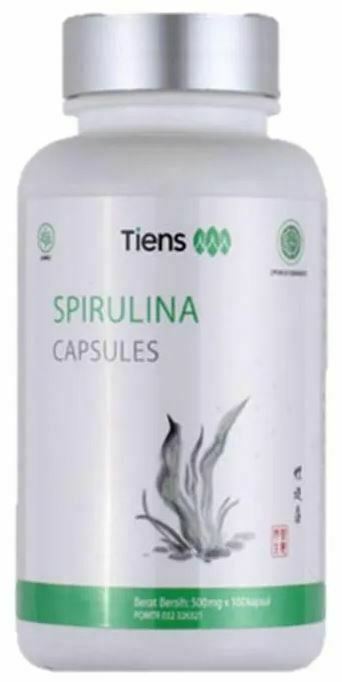
    So, you need to read the rules for use on the mask packaging first. However, in general, to make a mask, it is enough to prepare 2 mask capsules and then add enough water.

    The water used to wear the Spirulina mask must be clean, cold water. This is important to keep the face from bacteria and germs. Once mixed, stir until evenly distributed. Make the right mask dough, or that means not too thick and not too runny.

    3. Use on the face and neck

    After successfully making the Spirulina mask dough, the next step is to apply the mask on the face and neck.

    The important thing that needs to be done is that you have to make sure that the application is evenly distributed so that it can work well in all areas of the face. Be careful when applying it, avoiding the area around the eyes so as not to get irritated.

    Here are the next steps:

    • In addition to the face, you can also apply it on the neck to generalize the benefits.
    • Do not be too thick, because this will be difficult to dry and can have a negative impact on the skin. For example, irritation for sensitive skin, etc.
    • Wear the mask with a brush so it doesn’t get contaminated. After that, wait a maximum of 15 minutes.
    • If so, please rinse with warm water. Warm water will make the content of the mask absorbed more optimally.

    4. Apply Toner

    After the face is successfully rinsed until there is no remaining mask, you can also add a follow-up treatment, namely by using a toner. This toner will make the skin moister and maintain the pH of the skin.

    Toner also functions to clean the remaining mask optimally. Thus, the face looks clean.

    5. Use Moisturizer

    Not only that but the use of moisturizers is also required because moisturizers really help overcome dry skin. Especially after wearing a mask, the skin becomes cleaner and some have an impact on the skin feeling attracted because it has a dry type.

    So, to give optimal results, use toner as an alternative if you don’t want to use warm water.

    6. Combine with Olive Oil

    For other best results, you can also use a Spirulina mask with added other ingredients that are useful for the face. An example is an olive oil. This oil is also a natural ingredient that is safe on the skin and contains various benefits.

    Its content in it is vitamin E, iron, vitamin K, to phenolic. Add a few drops of olive oil to the Spirulina powder mask mixture. Then, apply the mask to the face evenly.

    7. Combine with Honey

    In addition to olive oil, you can also add honey to the mask. Honey, has many benefits for the face. Honey, can hydrate the skin, and clean the pores because there are antioxidants in it, so it can cure acne.

    So, the combination of honey and Spirulina will make maximum results. Make sure the honey used is real and pure honey, with no added sugar, etc.

    The way to use two combinations of ingredients for this mask is as follows:

    • Take one tablespoon of honey and mix it with two capsules of a spirulina mask.
    • If so, add a little water.
    • Then, apply it to the face and neck and wait for about 10 minutes
    • Finally, rinse with clean water.

    8. Eat Collagen Foods

    To maximize skin health, after wearing a Spirulina mask, it is recommended to always consume foods and drinks that are high in collagen.

    Collagen is known to be useful for improving skin beauty. Thus, the face becomes healthier. The use of Spirulina masks is indeed viral because of its content for skin health.

    However, it should not be used excessively. You can use it 2 times a week before going to bed.

  • What is Sparkling Wine and How to Make It

    What is Sparkling Wine and How to Make It

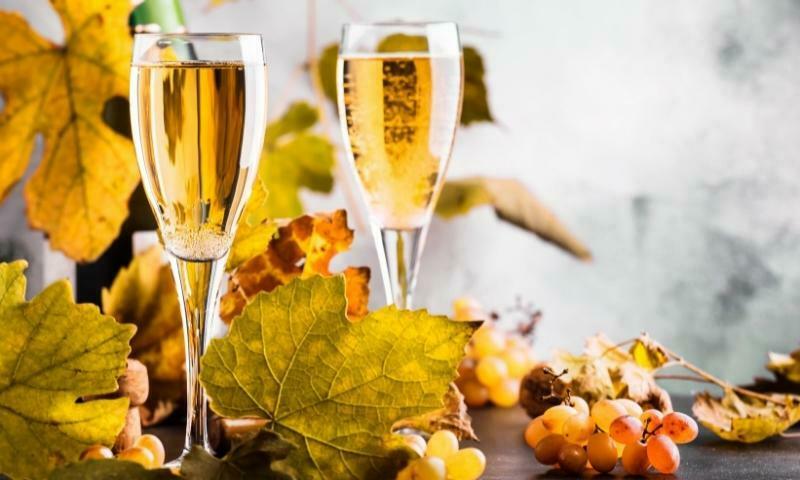
    What is Sparkling Wine? Yes, sparkling wine is a natural still wine that contains carbon dioxide. That’s why it has soda bubbles when it’s poured.

    The wine is sold in bottles of inches of various sizes and colors and contains 14% alcohol.

    Usually, the cork (bottle cap) is tightened and strengthened with a wire covered with silver foil to prevent the cork from falling off due to pressure and carbon dioxide.

    How to make Sparkling Wine

    What is sparkling wine

    In the process of making sparkling wine, there are two methods that can be done. The two methods are:

    1. Impregnation Method

    In this method, carbon dioxide gas is injected into the wine bottle individually and then in the cork cap.

    2. Champenoise Method

    Now if this method is used to make champagne by adding sugar and yeast to the wine to create a second fermentation in the bottle.

    Also read: Sequence of Service Restaurant: Definition and Procedure for Implementation

    Types of Sparkling Wine

    In general, sparkling wine has white and pink colors, but there are also red sparkling wines.

    There are 2 types of sparkling wine, namely:

    1. Champagne

    This wine is made in the Champagne region of France using the Champenoise method.

    Champagne is categorized as the best sparkling wine with the nickname The King of Wine so wine quality standards are used.

    Champagne Example:

    • Moet & Chandon Dom Perignon
    • Charles Heidsick
    • Mum Gordon Rougue
    • Runiart Dom Runinart

    2. Others Sparkling Wine

    This type of wine is usually made by both methods, either impregnation or champenoise. Generally produced in France, Germany, Italy, and Australia.

    Example:

    • Red Sparkling Burgundy (France)
    • Asti Spumante (Italy)
    • Casino Sect (Germany)
    • Borrosa Pearl (Australia)

    Sparkling Wine Bottle Type and Size

    Sparkling wine is usually sold in bottles of various types and sizes.

    Example:

    • Split contains 20 cl of wine
    • Half Bottle contains 40 cl of wine
    • Imperial Pint contains 60 cl of wine
    • Full Bottle contains 80 cl of wine
    • Magnum contains 160 cl of wine
    • Jero Boam contains 320 cl of wine

    How to Serve and Store Sparkling Wine

    Sparkling should be stored properly at a temperature of about 10 degrees Celsius in a horizontal condition.

    And best when served cold between 7-10 degrees Celsius.

    So a wine cooler is needed for this.

    Sparkling wine and food to match

    Sparkling wine can be drunk as a companion to various types of food. So in other words, sparkling wine goes well with all types of food.

    For example:

    • Brut with fish and oyster
    • Extra dry goes well with shells, fishes, lobsters
    • Sec goes well with caviar, smoked salmon, white meat and red meat
    • Demi sec, matches pates , fruits
    • Demidoux and doux go well with sweet foods like puddings, pastries etc.

    So you’re not curious anymore, what is sparkling wine?

  • 10 Kinds of Salad Dressings You Can Make at Home

    10 Kinds of Salad Dressings You Can Make at Home

    For those of you who love salads, you will feel bored if the salad dressings are not varied. The good news, in this article you will find out the various salad dressings that you can make at home.

    Salad Dressing is one of the main ingredients of the 4 components that make up the perfect salad. It can be in the form of liquid, sauce, and vinegar.

    In this article, we summarize the various dressing recipes that are guaranteed to take your salad to a different level.

    Curious? let’s check all the summaries we’ve collected below:

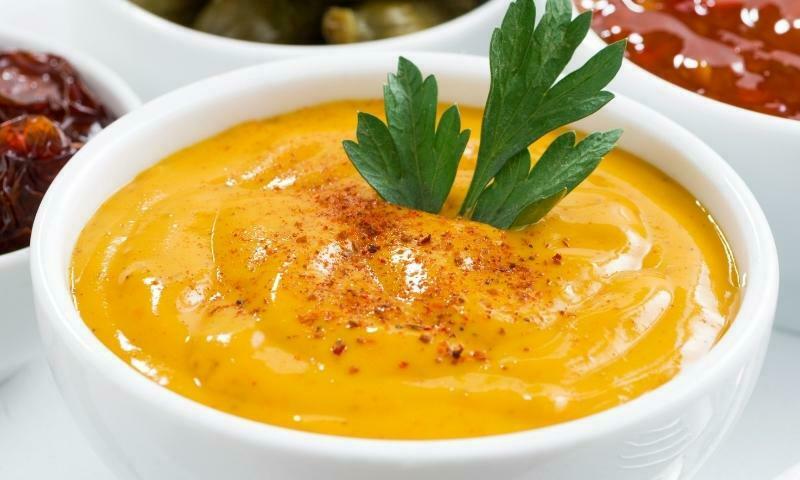
    1. French Dressing

    French dressing

    A classic recipe that everyone loves, made with oil and vinegar. This is the solid foundation of the salad dressing world.

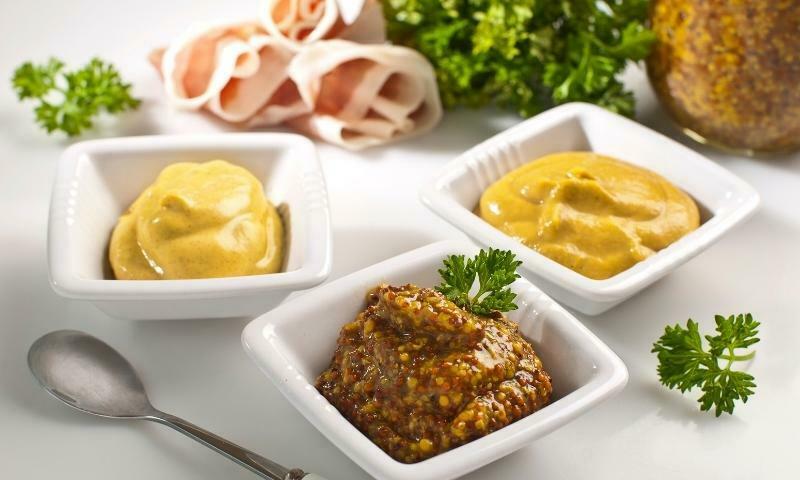
    To make it, whisk 1 tsp Dijon mustard with 2 tbsp white wine vinegar, 6 tbsp extra virgin olive oil, a pinch of sugar, salt, and pepper in a small bowl or whisk together in a jam jar.

    2. Honey & Mustard

    Honey and Mustard salad dressing

    Sweet with a hint of heat, this dressing is another popular combination.

    To make this super fresh dressing with a hint of honey, you only need 5 small ingredients that you always have in your kitchen.

    To make it, mix 2 tsp whole grain mustard with 2 tsp honey and the juice of 1 lemon in a small bowl.

    Gradually stir in 6 tablespoons of extra virgin olive oil and season with salt and pepper.

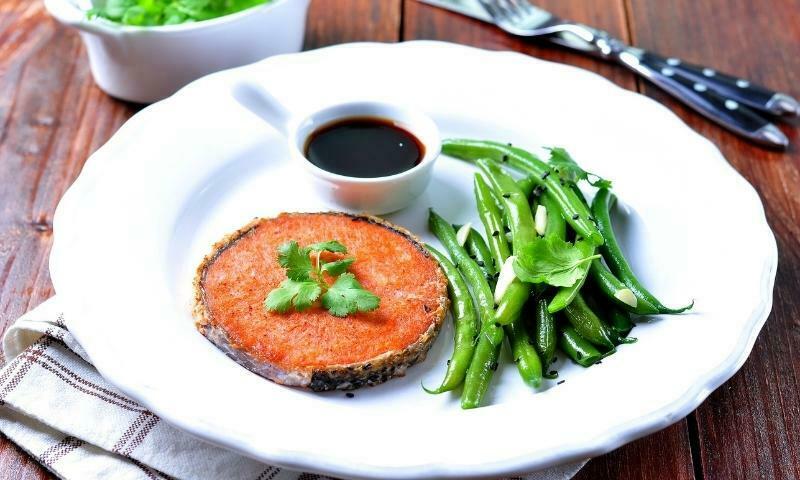
    3. Sesame & Soy

    Sesame & Soy sauce

    If you’re looking for a subtle spicy and savory taste, then this Asian-style sauce is ideal.

    Simply add 2 tbsp soy sauce, 2 tbsp toasted sesame oil, 2 tbsp peanut oil, 1 lime, tsp chili flakes, and 1 tsp honey in a small bowl and mix well.

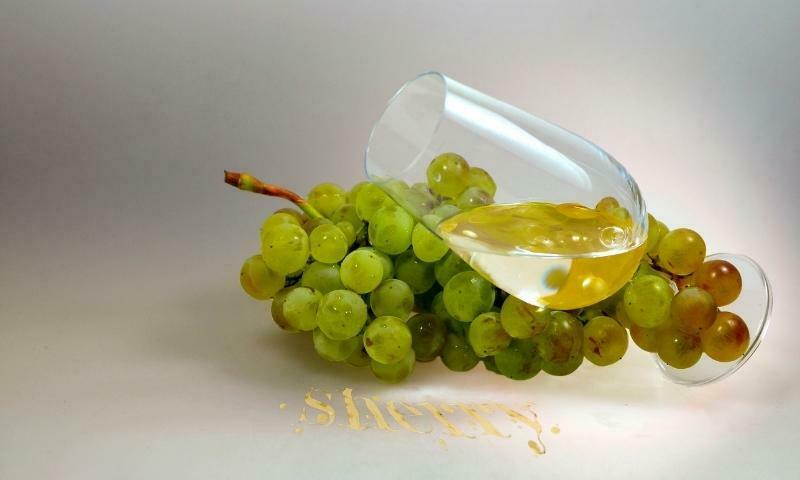
    4. Sherry and Sultana

    Sherry

    Unwrinkled, juicy sultanas and mildly sweet vinegar combine beautifully in this citrus sauce.

    Whisk together the zest and juice of 1 orange, 4 tablespoons sherry vinegar, and 6 tablespoons extra virgin olive oil in a small bowl. Season to taste then add 2 tbsp sultana.

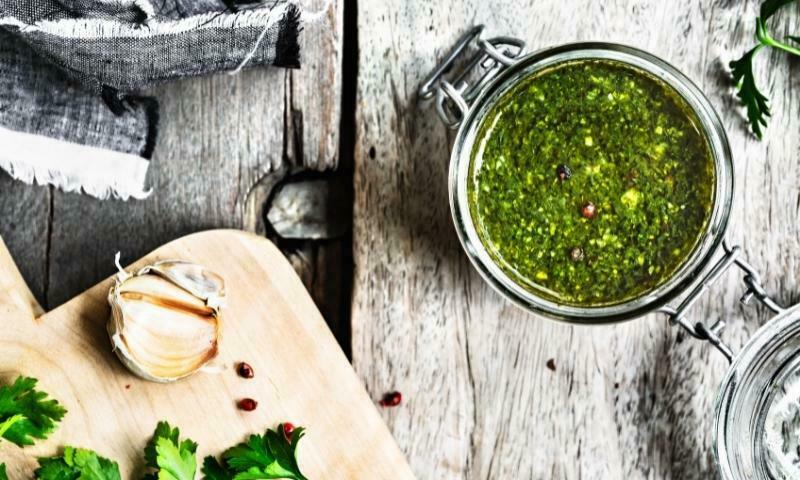
    5. Parsley Dressing

    Parsley Dressing

    This light herby sauce with a hint of garlic goes well with fish, pasta salad or nutrient-rich tabbouleh.

    There is nothing complicated in making this one dressing. Just need to mix it up a bit.

    To make it, cut into small parsley packets and add to a small bowl with 1 tsp Dijon mustard, 1 tbsp sherry vinegar, 1 clove of grated garlic, and 3 tbsp extra virgin olive oil.

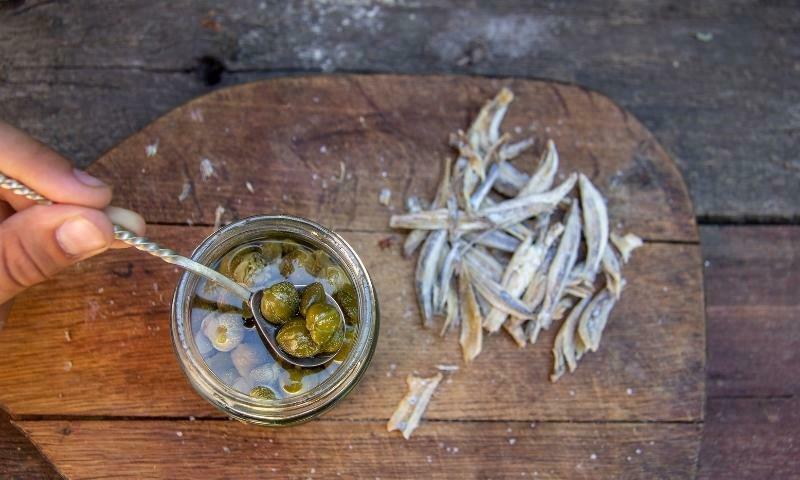
    6. Capers and Achovy

    Capers and Anchovy salad dressing

    Capers are one of the plants that are often used as a garnish for Mediterranean-style food.

    Combining garlic and anchovies creates the best savory and salty taste. Finish with a few drops of red wine vinegar and a handful of all-purpose capers.

    To make it, crush 1 clove of garlic with a pinch of salt and 2 fillets of anchovy in oil in a pestle and mortar. Whisk in 2 tbsp red wine vinegar followed by 6 tbsp extra virgin olive oil and 2 tbsp capers.

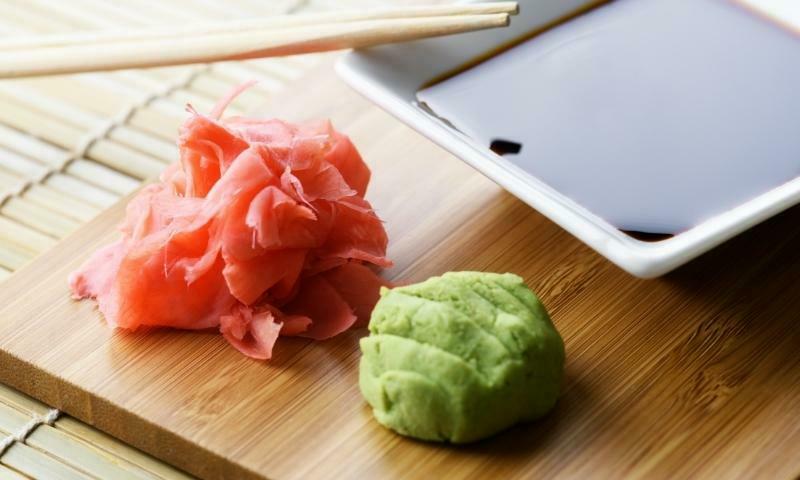
    7. Ginger and Wasabi

    Ginger & wasabi salad dressing

    Add a little heat to your standard salad with this spicy ginger dressing.

    To make it, grate a thumb-sized piece of ginger into a small bowl.

    Add 2 tsp wasabi paste, 6 tbsp rapeseed oil, and 1 tbsp rice wine vinegar.

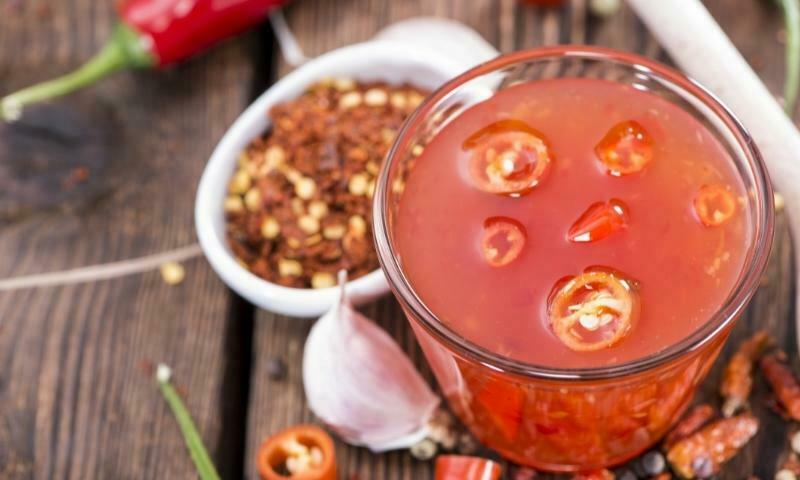
    8. Sweet Chili

    Sweet chile salad dressing

    Indonesian people are never separated from spicy taste. Therefore this Sweet Chili Dressing Salad will be perfect.

    This sweet, gooey chili sauce adds a little extra flavor to any salad.

    We also recommend trying it as a dipping sauce or sweet condiment. To make it, mix 2 tablespoons of sweet chili sauce with the zest of 2 limes and 6 tablespoons of rice wine vinegar in a small bowl.

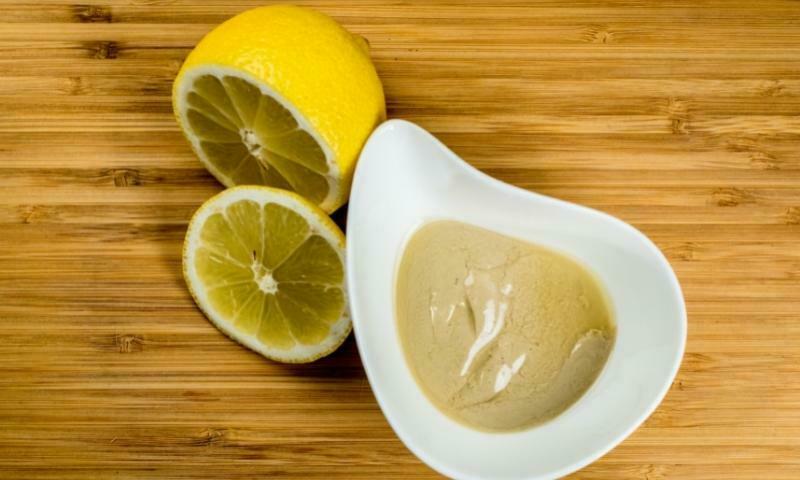
    9. Tahini

    Tahini dressing

    This cool, creamy sesame-based dip goes well with Middle Eastern salads or sprinkled over toasted halloumi.

    To make it, mix 2 tablespoons tahini with the juice of 1 lemon, salt, pepper and 6 tablespoons water in a small bowl.

    10. Minty Yogurt

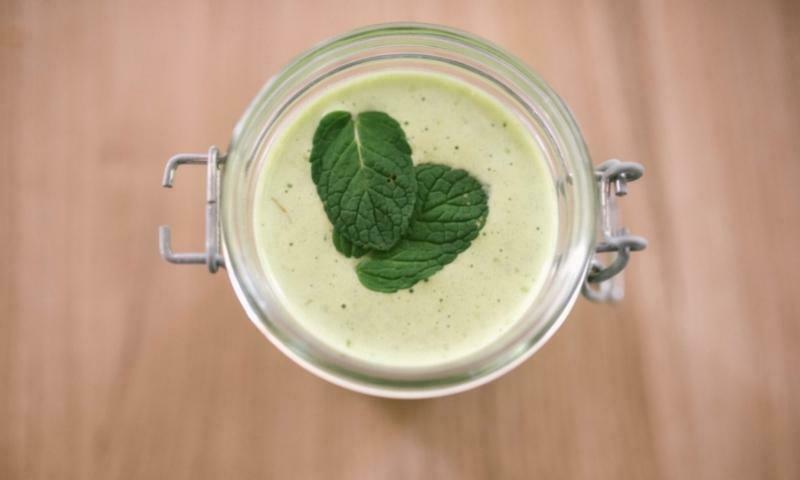
    Minty Yogurt

    What could be better than crunchy cucumber slices and a light mint dip? To make it, roughly chop the mint and cucumber wrappers.

    Mix in a bowl with 150g natural yogurt, 1 tbsp white wine vinegar, lemon zest and season with salt and pepper.

  • A La Carte: Definition, Menu Examples, Characteristics, and Advantages

    A La Carte: Definition, Menu Examples, Characteristics, and Advantages

    A la carte is the term for the system of serving dishes in star restaurants and upscale hotels.

    Maybe some of you have seen this term in fast food restaurants and you must be wondering, why do fast food restaurants also have an a la carte menu? Actually, what is the meaning of this term?

    Here’s the explanation:

    Let’s see the following explanation so that you better understand the term a la carte.

    What is A La Carte? (Definition)

    Ala carte is a French expression that means “according to the card ” in English.

    The meaning of the word refers to the menu of food available in the restaurant. All menus include:

    • Appetizer
    • Main Course
    • Dessert

    Restaurant visitors can freely choose what type of food they want from the menu in a restaurant according to their food tastes and pay for the menu they choose

    This term is a revolution of the restaurant system that occurred in the 19th century.

    At that time, each restaurant would only offer a  table d’hôte system meaning diners could only enjoy their pre-set meals.

    This menu is then served to all visitors who want to take part. With no other choice but the dish that is already in front of the visitor.

    Judging from the table d’hôte dish system it is very inefficient and leaves a lot of leftover food wasted.

    Finally came the a la carte system that provides various types of food that visitors can order according to their appetite.

    Also read: Gueridon Service: Definition, Types, Advantages, and Disadvantages

    Characteristics of A La Carte

    1. This menu has more variety than the table d’hôte menu which has more places to prepare food than the a la carte menu.
    2. Offers a wide selection of food and beverages by type and category.
    3. Each item on the menu has a small narration below its food menu to explain the type of dish.
    4. The chef will cook the dish after receiving the food order from the waiter. So this food can be served well and still warm.
    5. Each meal has a different preparation time.
    6. Food prices are much more expensive than table d’hôte menus and require more space and kitchen equipment.
    7. Usually, these dishes offer varied and expensive seasonal dishes.
    8. All appetizers, dishes, salads and desserts can be ordered separately by customers
    9. Dishes that often use this system are found in almost all types of food and beverage businesses. Except for banquets, flight catering, institutional catering, and other meeting catering.

    Because it has a large selection of food and drinks, sometimes restaurant management can’t know the increase in orders from each food.

    This makes it difficult for the restaurant industry to control raw material supplies and ensures that much fewer leftovers are made than table d’hôte menus.

    Here are the food menu styles that you should know:

    A La Carte and Semi A La Carte Menu Style

    1. Breakfast Menu 

    Almost all of the breakfast menu comes from both a la carte and all a la carte segments.

    Examples of a la carte menus on the breakfast menu offer juices, fruit, cereals, eggs, meats, pancakes, French toast, waffles, bread, side dishes, and drinks. Meanwhile, the semi-segment usually offers a combination of food variants.

    Usually, the breakfast menu has the following characteristics:

    • Although breakfast menus are offered in many upscale restaurants and large hotels, they are usually more expensive. Even so, the breakfast menu offers food at a reasonable price.
    • Some breakfast dishes will be prepared after the order has been made.
    • The breakfast menu usually has a reliable chef to provide food quickly.
    • American-style service usually has a waiter take orders and serve them to the guest table.

    Example of A La Carte Breakfast Menu Menu :

    • Juice,
    • Fruit,
    • Cereals,
    • omelet,
    • Waffles.
    1. Luncheon Menu
    A La Carte Is

    Unlike the breakfast menu, the lunch menu usually offers a la carte and semi a la carte dishes.

    In this lunch section, the dishes they usually offer are appetizers, salads, sandwiches, entrees, desserts, and drinks.

    As for the spring menu, it is an appetizer with salad, vegetables, potatoes, or rice. Here are the characteristics that you can find in the lunch menu:

    • The lunch menu usually offers special dishes.
    • The portion of the lunch menu dish is smaller.
    • Prices listed on the lunch menu may vary depending on the type of food, the operating system of the hotel or restaurant, and the location of the hotel or restaurant.
    • Requires proper kitchen equipment because usually, this lunch menu has many different cooking methods. Such as bread, baked, fried, and others.

    Example of A La Carte Lunch Menu Menu :

    • Sandwich,
    • Pasta,
    • Soup,
    • Salad.
    1. Dinner Menu

    The dinner menu includes a la carte and semi a la carte dishes. Usually, the dinner menu provides more appetizers than the lunch menu. Countries that often follow this system are America, France, and Russia.

    Example of A La Carte Dinner Menu :

    • Steak,
    • Short Ribs,
    • Lasagne,
    • Crab Cakes.
    1. California Menu

    Usually, this menu can only be found in California restaurants that only provide dishes based on time, whether it’s breakfast, lunch, or dinner.

    1. Ethnic Menu

    Furthermore, there is an ethnic menu that offers semi-a la carte or a la carte dishes.

    This menu provides dishes derived from traditional foods from certain regions or countries. The price range they offer tends to be more expensive.

    Advantages and Disadvantages of A La Carte

    Deficiency

    1. Slow Service

    This system is not very suitable for restaurants that have busy visitors. The more customers who order the a la carte menu, the slower the restaurant service to fulfill their customers’ orders.

    As a result, your restaurant will get complaints and complaints from visitors, of course, this can damage the reputation of the restaurant.

    1. Professional Team

    Because it provides many types of food, this system forces the staff to work faster.

    Starting from serving orders, delivering dishes, cooking processes, and others. Of course, this kind of service can only be done by a team of experienced waiters and chefs.

    Advantages

    1. Serving Customers Well

    One of the advantages or advantages of this system is that it offers good service to customers, from customers arriving, ordering food, to leave the restaurant.

    Customers can experience special service starting from choosing a seat, choosing a dish, delivering food, and professional waiters who can provide answers and best dish recommendations for all customer questions.

    This service is what makes customers feel special. Of course, this service system is impossible for them to get when visiting fast food restaurants or all-you-can-eat restaurants.

    1. Gaining Customer Loyalty

    Having loyal customers is an award for every business industry. For restaurants, one way to win the heart of a customer is to treat them well.

    Of course, this system is the best way and trick to win customers’ hearts and create a special taste and customer satisfaction from restaurant service.

    Table Setting Standard

    Almost all types of restaurants and hotels have unit menus like this system, ranging from casual places to fine dining places with luxurious white tablecloths.

    In addition to the menu, they also pay attention to the table setting so that the restaurant’s exterior looks more luxurious.

    Actually, this table setting aims so that the waiter or waitress can arrange the place for each guest’s dish to be more organized and orderly when serving food.

    However, this standard of table setting is an obligation that must be carried out by every high-end restaurant.

    This table-setting system applies in every type of restaurant and hotel business.

    In addition, by implementing this system, visitors can rate the restaurant business services much better, so they believe in the quality of the dishes and restaurant service they will receive commensurate with the price they pay.

    Here’s how to create a table setting:

    • Place the main plate in the center of the table in an open position,
    • Place the knife and fork around the main plate,
    • Place the companion plate about 5 to 6 inches to the left of the main plate, and place the companion knife on the top right and facing left,
    • Position the napkin in the center of the main plate,
    • Position the glass about 2-3 inches to the right and about 2-3 inches from the tip of the fork.
    Example of A La Carte Table Setting

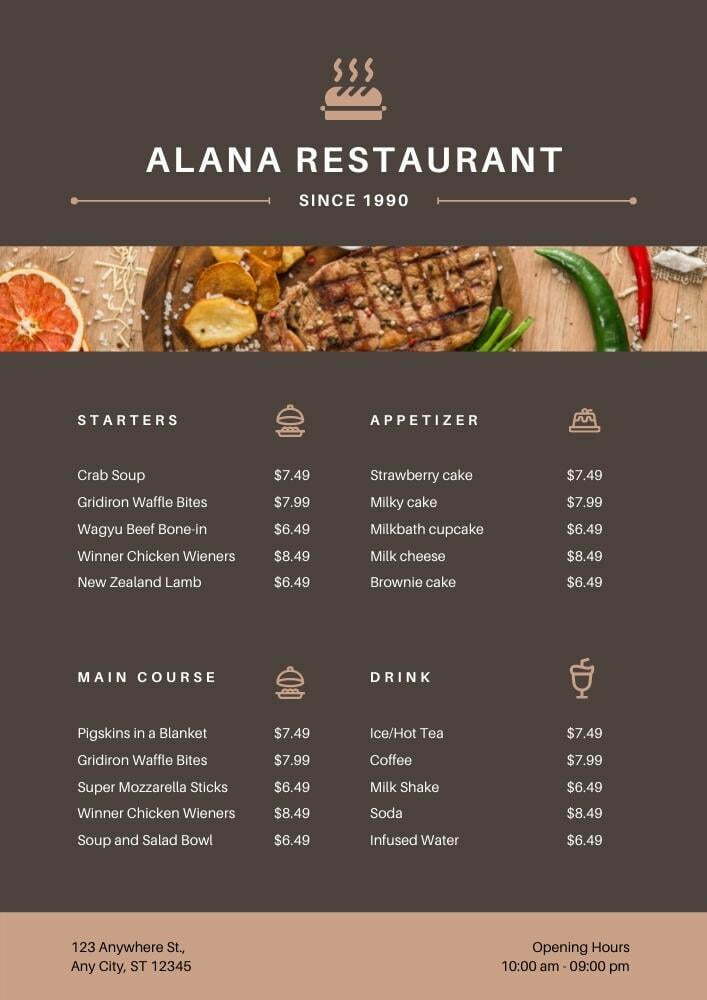
    Sample A La Carte Menu

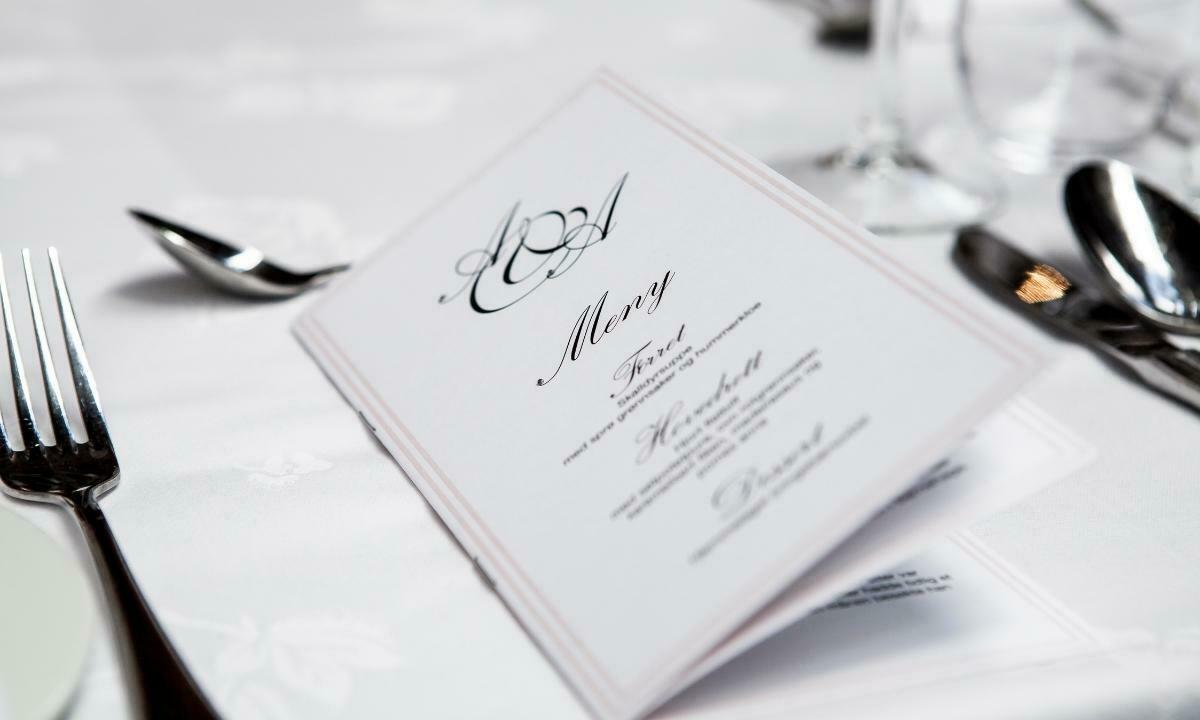
    To improve the quality of restaurant service, at least the restaurant has a menu book that displays the available food dishes based on the type of food and its category.

    The following is an example of a menu book as a reference so that you know what to include in the menu book.

    In addition to a complete menu of dishes, of course, you must have a charming and neat appearance of the menu book, so that customers can read it well.

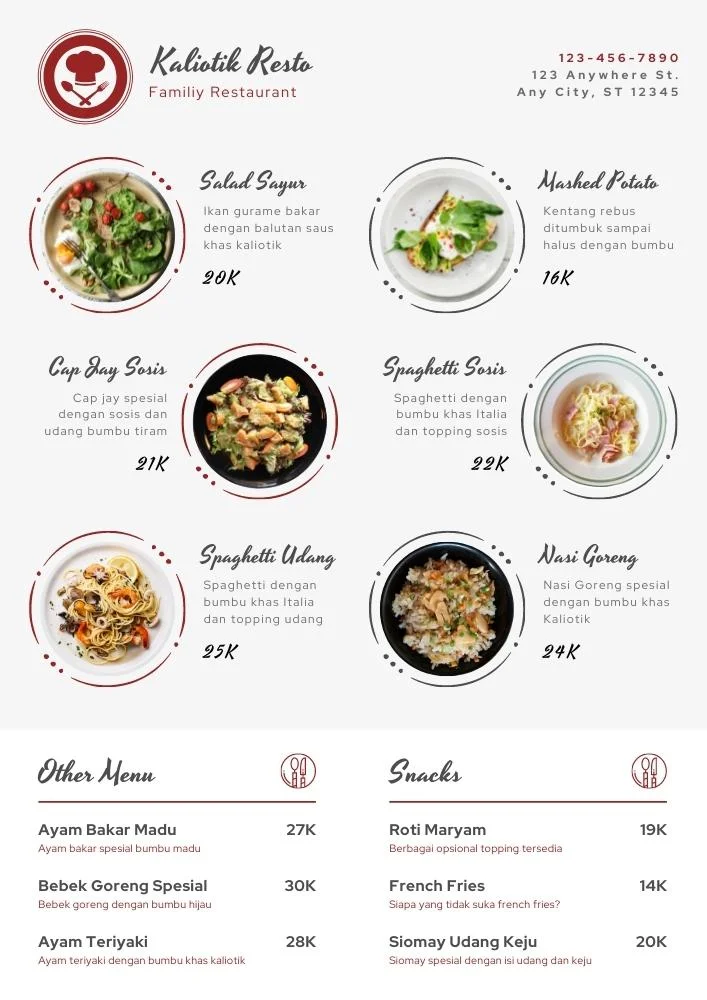
    1. Sample Menu A La Carte Indonesian food

    In Indonesia itself, many have applied the concept of menu presentation with the concept of A la carte. Here is one of them.

    Example of Indonesian A la Carte Menu
    Sample A la Carte menu

    2. Sample A La Carte Menu Overseas

    More than 65% of restaurants in Europe apply the A La Carte menu concept. Here is one example.

    Sample A La Carte Menu

    Digital Menu

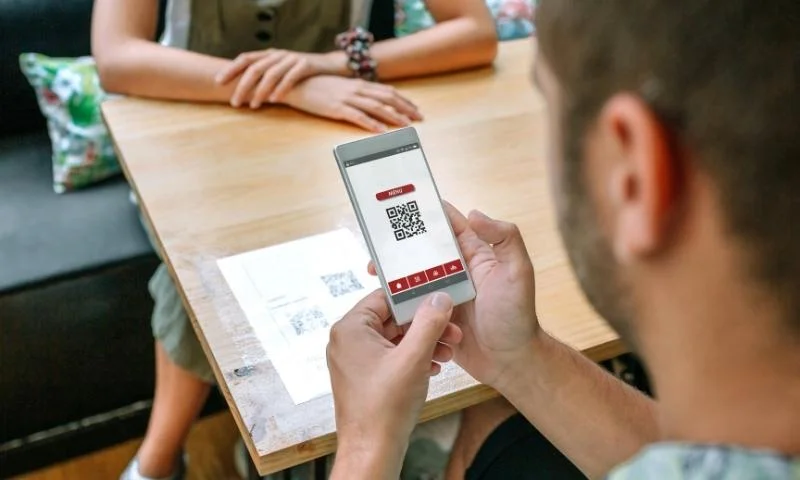
    The modern way to digitize the a la carte menu is to use a QR code. The things you must have before making this digital menu are food menus, food menu documents in PDF format or a website.

    This QR code is one of the most important features in any food business.

    Apart from being easy to access via smartphones, restaurants can minimize the spread of the virus between visitors and restaurant employees.

    You only need to create a QR code through an available online application and then print the QR code, insert it into a photo frame to make it look more beautiful, and place it in the middle of the dining table and around the restaurant.

    Besides being useful for displaying food menus, you can also use QR codes as a payment method easily.

    Scan QR Code Menu A La Carte

    However, as good as technology is, service is an important thing that a customer is looking for. There are some people who besides enjoying the food menu, they want to feel well served.

    Although digital technology has developed far, the service of waiters and waitresses is not replaced.

    Already Understand What is A la Carte?

    That’s the meaning of the term a la carte that you should know. Star hotels and high-end restaurants do use this system to better serve their customers.

    As for fast food restaurants, they only use this term in menu choices, not with special services that you can find and feel when visiting expensive restaurants.

  • Gueridon Service: Definition, Types, Advantages, and Disadvantages

    Gueridon Service: Definition, Types, Advantages, and Disadvantages

    Gueridon Service is a method of serving food by bringing a trolley or cart directly. So the presentation process can be done in front of guests.

    This method is widely used in some restaurants to add an exclusive impression. In addition, it will also add an interesting impression so that guests will get a dish of food in a condition that is still very fresh.

    The process of serving food in this way has its own advantages and disadvantages. So pay close attention to what can be obtained and can also be minimized so that guests continue to enjoy.

    Gueridon Service Definition

    Food serving varies from fine dining to serving directly to the table from guests. One type of presentation that is widely used today is the Gueridon service.

    Gueridon service is a method of serving food directly using a gueridon trolley. This trolley usually contains ready-to-eat or semi-finished food.

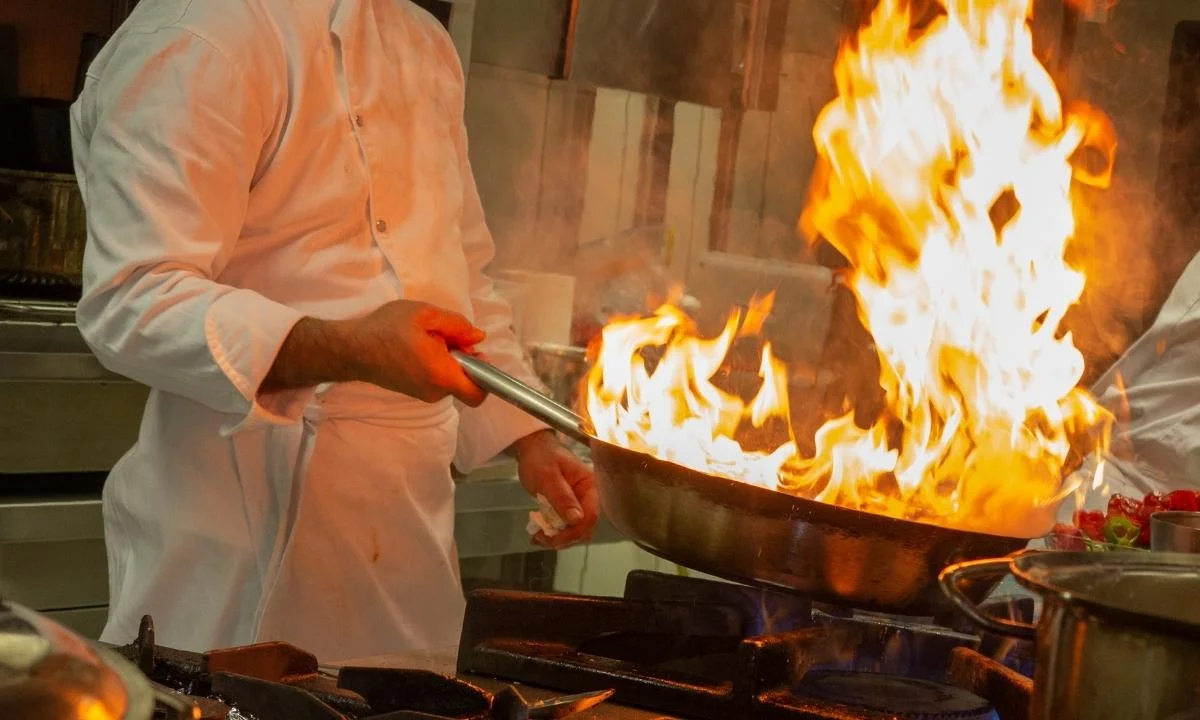
    Furthermore, the trolley can also contain a stove which will later be used to cook in front of the guests directly equipped with gas cylinders. But there are also those that are already in the form of ready-to-eat foods and are ready to be served.

    That’s why serving food in this way is quite popular in some restaurants. Because the process of serving the food will be done directly so that you can’t help but see how the chef’s abilities are.

    So someone can see firsthand how the food is served or how the cooking is done. If you have an attraction ability, the chef can show it as part of the show.

    Geridon Service Type

    Geridon Service Type

    Gueridon is a service whose service is determined by the type of food or how it is served. The following are some of the types of services that may be offered.

    1. Salad Serving

    Next there will be a salad serving that utilizes this method. As we all know, it is usually wrong to make it fresh and will be mixed directly with the dressing.

    If it has been mixed before when served, it may taste a little different. With this method of presentation, prayers will be served directly in front of guests so that the conditions are still really fresh.

    With this method, you can also determine for yourself how much food they will consume. So they don’t have to worry if it’s too much or too little.

    Also read: What is Hospitality? Complete Meaning and Scope of Work

    2. Fruit Serving

    Gueridon service is a service that always prioritizes the freshness of every food. That is why in every presentation the food is always brought directly and around to every consumer.

    That is why one of the types of food served is fruit which will be cut directly. The fruit will be cut and then given directly as a dessert.

    In addition, it can also be processed directly on the trolley such as juice or other beverages. So consumers can choose for themselves which fruit to consume and how much is needed.

    3. Serving Companion Meals

    Next is to serve various types of side dishes which will also be played later. What to eat later is usually quite a lot starting from bread, sauce, or something else.

    Usually some types of food will not be served directly or placed on the table. So if someone wants to use it or needs it, they can directly ask the waiters or cooks who brought it.

    This way the table will be very clean and contain only a few dishes and dishes that are really needed. With this method, the table cleaning process can run better because it is not too messy.

    4. Cooking Food

    Next up is the chef’s own cooking attraction using a trolley. Usually there are stoves and cooking utensils that can be pushed portable wherever consumers want them.

    Usually the food ingredients used are still in fresh condition so that guests can immediately wait and be served in a new condition. But for some materials also use semi-finished.

    When it will serve freshly cooked briefly and do not have to wait too long. Moreover, Gueridon service is a service that will make you more comfortable because everything is processed without any secrets at all.

    5. Adding Food

    The last service that will be provided when using this method is to add food that may have run out. This applies to restaurant services that apply an unlimited menu.

    In addition, it also imposes some additions on some foodstuffs for free. You can add soup or add other ingredients that are already rationed.

    So you can directly go around from one consumer to another. By using this service, one can get perfect service and will not feel lacking.

    The advantages of Gueridon Service

    There are several advantages of the Gueridon service that make it still liked by many people. Here are some of the advantages that can be obtained.

    • All food served with this method is fresh so it will increase the satisfaction of consumers who consume it.
    • Gueridon service is a personal service so everyone will feel very well served and cared for because everything depends on the request.
    • This service will provide convenience when delivering food directly to consumers.
    • Consumers can immediately give praise to the chef if they feel they enjoy the various types of trials that are given.
    • Make it easy for consumers to choose roughly what type of food they want, including the portion they want to consume.
    • Provide greater satisfaction to consumers so that the risk of being rejected by consumers is very small.

    Cons of Gueridon

    Although it has advantages, it turns out that there are also disadvantages that gueridon service has. Here are some drawbacks that may occur.

    • For chefs, sometimes pushing a trolley is quite inconvenient when carrying large amounts of food or cooking utensils.
    • It will be difficult to move from one place to another if you want to do a cooking demonstration in front of many people.
    • There is a possibility of an accident when cooking because the tools that are carried everywhere can be exposed to the hands.
    • In the event of an accident, consumers will also experience it because they will carry the stove anywhere, including hot cooking utensils.
    • Impossible to serve large quantities of food. But it can be done if the chef is assisted by several waiters.
    • It is likely that it will be difficult to carry out on-site preparations so a prior preparation process is required. So when in front of consumers just cook.
    • Don’t make mistakes when cooking in front of guests.

    Gueridon service is a fast-paced process of serving food. It can even do some kind of attraction so that guests will be more interested and willing to consume the food served.

    Unfortunately, there are still some risks that are obtained when using this method. One of the risks that may be obtained is an accident at work or it can cause other problems for guests.

  • What is Hospitality? Complete Meaning and Scope of Work

    What is Hospitality? Complete Meaning and Scope of Work

    What is hospitality? At first, glance when we hear hospitality, what comes to mind is a hospital. But the fact is, hospitality is not a hospital. Although these words are both taken from English.

    For those who have been in the world of hospitality, of course, this term is not foreign at all. Yes, it can’t be blamed either, because there is a lack of information about the hospitality industry.

    So what is the meaning of hospitality?

    Hospitality is an attitude or an act given by others. Or simply the relationship between guest and host, of which treatment and hospitality is the foundation.

    Is hospitality only limited to that? certainly not. Let’s look at the complete understanding of what hospitality is and the examples below.

    Definition of Hospitality

    If we open an English dictionary, then Hospitality means “hospitality”

    According to the Merriam-Webster dictionary, what is meant by hospitality has two meanings. That is:

    1. Hospitable: Treatment, Welcoming, and Behavior.
    2. Activities or businesses that focus on service to guests. Like in hotels, restaurants, bars, and the like.

    So this hospitality is actually commonly spoken by English speakers. Especially native speakers.

    Welcoming guests who come to the house in a friendly and respectful manner is categorized as hospitality.

    Amazingly, nowadays as we know, hospitality has become a promising industry and business.

    One of them is the hotel business.

    When you go to a hotel, you will definitely feel a pleasant service. Starting from being greeted with a smile when you enter the lobby, to when you want to eat at the hotel.

    It should be so, not only for hotels that fall into the hospitality category.

    Some examples of the hospitality industry include the following:

    • Restaurant
    • Events
    • Travel & Tourism
    • Bar

    Of these various categories, there are still many professions that support it.

    Some of the professions that often enter the hospitality industry:

    • Chef
    • Consultant F&B
    • Event organizer
    • Travel Guide

    Job Prospects in Hospitality Industry

    Job opportunities and prospects in the hospitality industry are very promising because business in this industry is long last.

    The fact that is sufficient to support this argument is the increase in the number of foreign tourists in Indonesia which reaches 5-10% every year.

    And what’s cool is that the travel and tourism industry accounts for the third largest state revenue, which is 9.3%. Bigger than the fields of education, automotive and financial services.

    Besides having a fairly stable and sustainable potential.

    Work in this field has its own charm.

    For example, you work in a 5-star hotel. Of course, you work in a very beautiful, fun, and beautiful place.

    Those who work in the field of travel and tourism can travel around the country as tour guides.

    And the most important pleasure of working in the hospitality industry is, that you can share happiness and make other people’s days meaningful through the services you provide.

    FAQ

    What is Hospitality Jobs?

    As has been explained a little above, some of these jobs are jobs that are vital in their position in this Industry.
    Waiter and Waitress
    Usually in the restaurant business. Because they believe that service can perfect a meal.
    Receptionists
    Receptionists are usually synonymous with hotels, but nowadays receptionists are used in many industries.
    Housekeeping
    Although it seems easy, the housekeeper’s job is very vital. That is to maintain the comfort of guests or customers during their stay at the hotel.
    Food and Beverage
    Food and Beverage in a hotel is a division of its own. They are in charge of arranging meals and dishes for guests. Consists of chef to waiter and waitress.

    Does the restaurant in the hospitality industry?

    Yes, restaurants are one of the easiest hospitality businesses to find today. 
    Although not all restaurants apply hospitable in practice

    What is the Hospitality Industry?

    In simple terms, the hospitality industry is a business that emphasizes service as its business icon. 
    Examples are hotels, restaurants and bars.
    The service provided by the waiter and waitress is expected to give a good impression in the eyes of the customer.